
Why Is Minimum Coverage Important With SR22?

minimum coverage ensures compliance

When it comes to SR22 requirements, understanding minimum coverage is essential for your compliance and protection. This coverage not only meets state mandates but also shields you from hefty out-of-pocket expenses in case of an accident. Failing to maintain the required coverage can lead to penalties and complications, especially in states like Florida. What happens if you ignore these requirements? The implications could be more serious than you think.

When you find yourself needing an SR22, understanding the minimum coverage requirements is important for maintaining your driving privileges. An SR22 isn't an insurance policy but a certificate of financial responsibility that verifies compliance with your state's minimum liability insurance mandates. In Florida, this means you'll need at least $10,000 in personal injury protection (PIP) and $10,000 in property damage liability (PDL). Other states may have different requirements, so it's necessary to be aware of local laws. Additionally, SR-22 insurance is typically required for drivers who have committed serious offenses and need to demonstrate financial responsibility.

Minimum coverage is more than just a legal formality; it's a safeguard against financial liability. By ensuring you meet these minimums, you provide proof of liability coverage, which is particularly important if you've committed serious offenses like DUIs or driving without insurance. The cost of your SR22 insurance will likely be higher, reflecting the increased risk associated with your driving record. In this context, higher coverage limits can offer additional protection, shielding you from significant out-of-pocket expenses in the event of an accident. SR22 also acts as proof to authorities that required auto insurance coverage is maintained, which is crucial for your driving status.

Minimum coverage is essential for financial protection, especially after serious offenses, and higher limits can further shield you from unexpected costs.

In addition to the mandatory PIP and PDL, some states may require bodily injury liability coverage as part of your SR22 filing. This coverage helps protect against costs related to injuries inflicted on others during an accident. For instance, in Florida, your basic PIP covers up to 80% of your medical expenses after an accident, which is essential for ensuring your financial wellbeing.

While extensive and collision coverage aren't part of the minimum SR22 requirements, considering additional coverage options could be beneficial based on your existing health insurance.

Maintaining the minimum coverage limits is significant. In Florida, the standard requirement is $10,000 in PIP and $10,000 in PDL, but more severe offenses may necessitate higher limits, such as those found in FR44 policies. These policies, designed for more serious infractions, often require limits of $100,000 for bodily injury. The financial burden of an accident can be overwhelming, making higher limits a wise investment for your peace of mind.

Your insurance costs will reflect the perceived risk of your driving history. A history of serious traffic violations will likely lead to higher SR22 premiums, and any lapses in coverage can result in additional fines or even license suspension. It's important to maintain continuous insurance coverage to avoid these penalties. If your coverage lapses, your insurer is obligated to notify the state, which could jeopardize your driving privileges.

Finally, if you don't own a car but still need to drive, non-owner SR22 policies might be necessary. These allow you to meet the minimum coverage requirements while driving vehicles that aren't yours. Understanding state-specific requirements and maintaining uninterrupted coverage is key to complying with SR22 regulations, ensuring you avoid extended penalties.

Conclusion

In the world of driving, minimum coverage with an SR22 acts as both a safety net and a double-edged sword. On one hand, it protects you from hefty out-of-pocket expenses after an accident; on the other, it's a necessary step to regain your driving privileges. Without it, you risk facing penalties and greater complications. Balancing these realities underscores the essential role minimum coverage plays—not just in compliance, but in ensuring your financial security on the road.
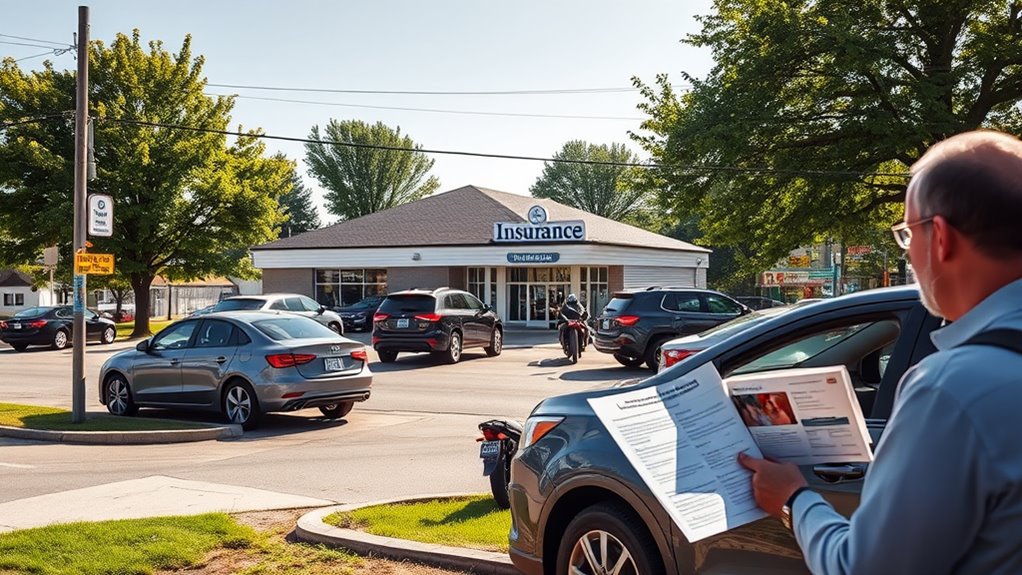
Triggers for Mandatory Insurance in Ohio

ohio mandatory insurance triggers

In Ohio, mandatory insurance isn't just a suggestion; it's a requirement tied directly to vehicle ownership and operation. If you own or drive a vehicle, maintaining the minimum insurance coverage is essential to protect yourself and others. Ignoring this obligation can lead to serious penalties, including license suspension. Understanding these triggers is important for avoiding financial and legal pitfalls. But what specific actions can put you at risk?

In Ohio, understanding the triggers for mandatory insurance is vital for every driver, as failing to comply can lead to significant penalties. The state mandates that you carry at least $25,000 in bodily injury coverage per person, $50,000 per accident, and $25,000 in property damage coverage per accident. These minimums are designed to protect not just yourself but also others on the road. If you don't meet these requirements, you risk facing severe consequences, including license suspension until you obtain proper insurance.

Proof of financial responsibility is another significant aspect you must evaluate. You're required to show evidence of insurance or other acceptable financial responsibility methods, such as a $30,000 bond or a deposit with the state treasurer. This proof must be readily available in your vehicle, as law enforcement may request it during traffic stops. Failing to provide this documentation could lead to additional penalties and administrative fees, compounding the issues of non-compliance. An SR-22 certificate is often needed to demonstrate future compliance after certain violations.

While the minimum coverage is often seen as sufficient, it's important to recognize its limitations. In serious accidents, the minimum may not cover all damages incurred, prompting many drivers to assess higher coverage limits. Bodily injury liability will cover medical expenses for others if you're at fault, while property damage liability takes care of damages to other vehicles or property. Many drivers opt for more than the minimum liability coverage due to high potential claims.

Although optional coverages like collision, extensive, MedPay, and uninsured motorist coverage exist, they aren't legally required. This flexibility allows you to tailor your insurance to better fit your needs, but it also places the onus on you to guarantee adequate protection.

Ohio operates under a fault system, meaning that the at-fault driver is liable for damages incurred in an accident. This contrasts with no-fault systems in other states, where personal injury protection is mandatory, and you may need to navigate a different process for claims. If you're involved in an accident, understanding this system is vital, as it affects how compensation is handled and the potential for legal ramifications.

The penalties for non-compliance can escalate quickly. A first-time offender may face license suspension until insurance is obtained, with a reinstatement fee of $40. Subsequent offenses incur higher fees and may require an SR-22 certificate as proof of future compliance. Additionally, failure to surrender your license could lead to further administrative fees, and you might even lose your vehicle registration.

Penalties for non-compliance in Ohio can escalate swiftly, leading to license suspension and increased fees for repeat offenders.

Legislative updates have shaped Ohio's insurance requirements, reinforcing the need for financial responsibility. The Ohio Department of Insurance oversees these regulations, guaranteeing that drivers comply with the law.

As you navigate your responsibilities on the road, it's important to stay informed about the evolving landscape of mandatory insurance to protect yourself and others effectively. Overall, being aware of these triggers not only keeps you compliant but also guarantees that you're prepared for any eventualities on the road.

Conclusion

In Ohio, the theory that mandatory insurance is merely a financial burden often overlooks its protective purpose. By requiring coverage, the state safeguards not only individual drivers but also the broader community from the devastating financial impacts of accidents. Ignoring these mandates can result in severe penalties, underscoring the importance of compliance. Ultimately, understanding the rationale behind these triggers reveals that maintaining insurance isn't just a legal obligation—it's a critical step in ensuring safety on the roads for everyone.

Duration of Ohio’s Insurance Requirement Explained

ohio insurance duration explained

Understanding the duration of Ohio's insurance requirement is essential for every driver. You need to maintain continuous liability coverage to avoid penalties like fines or license suspension. Any lapse in your policy could lead to significant consequences. Consequently, it's important to know not just the minimum coverage required, but also how long your policy remains valid. What steps can you take to guarantee you stay compliant and avoid potential pitfalls?

In Ohio, every driver is required to maintain liability insurance, which must meet specific minimum coverage levels of $25,000 for bodily injury per person, $50,000 per accident, and $25,000 for property damage. This mandate guarantees that in the event of an accident, drivers can cover the financial responsibilities that arise from injuries or property damage caused to other parties. Adhering to these requirements is imperative not only for legal compliance but also for protecting oneself financially.

The duration of your liability insurance coverage is equally important. Policies can vary in length, but they must adhere to Ohio's state requirements for coverage duration. Continuous coverage is essential; if you allow your policy to lapse, you expose yourself to potential legal penalties, including fines and license suspension. It's important to maintain uninterrupted insurance to avoid these consequences, as Ohio law mandates that drivers carry proof of insurance at all times. Ohio's new requirements increase the minimum auto liability coverage, emphasizing the need for drivers to stay informed. Additionally, SR-22 insurance may be required for high-risk drivers who have had their licenses suspended due to lack of coverage.

Maintaining continuous liability insurance is crucial in Ohio to avoid legal penalties and ensure compliance with state requirements.

When obtaining a new policy, it must meet current minimum liability requirements. The same applies when renewing an existing policy; it must comply with state regulations. This means that you need to stay informed about any changes in the law that could affect your coverage. Your policy should also clearly specify its duration, which aligns with state laws to guarantee transparency and accountability in your insurance obligations.

While the focus has primarily been on liability insurance, it's important to understand the broader context of financial responsibility. Insurance is just one method of fulfilling this requirement. Alternatives such as bonds or self-insurance are available, but they come with their own complexities and obligations. For most drivers, maintaining standard liability insurance is the most straightforward and practical approach to meet Ohio's financial responsibility laws.

If you find yourself without insurance, the repercussions can be significant. A first offense leads to a license suspension and incurs a reinstatement fee. The penalties escalate with repeated offenses, resulting in longer suspensions and higher fees. If caught driving without insurance, you may also be required to obtain an SR-22 certificate, which demonstrates that you have the necessary coverage. The failure to surrender a license can lead to additional fines, compounding the financial impact of non-compliance.

In addition to understanding your obligations, being aware of the car insurance market can also benefit you. Factors like driving history and vehicle type influence premiums, and while your credit score can affect your rates, it shouldn't be the primary factor. This means you should shop around and compare rates among various providers to find a policy that suits both your needs and budget.

The Ohio Department of Insurance oversees these regulations, guaranteeing that insurance providers adhere to state laws. Staying compliant with these rules not only protects you legally but also provides peace of mind while driving in Ohio. Understanding the duration of Ohio's insurance requirement is imperative in maintaining your driving privileges and financial responsibility.

Conclusion

In Ohio, maintaining continuous liability insurance is like keeping your car fueled; a moment of negligence can leave you stranded. Just as a driver wouldn't want to run out of gas on a busy highway, you don't want to face legal penalties from a coverage lapse. Staying informed and renewing your policy on time not only keeps you compliant but also guarantees your financial safety on the road. Make it a habit to check your coverage regularly—it's a small effort for peace of mind.

Call Us Now