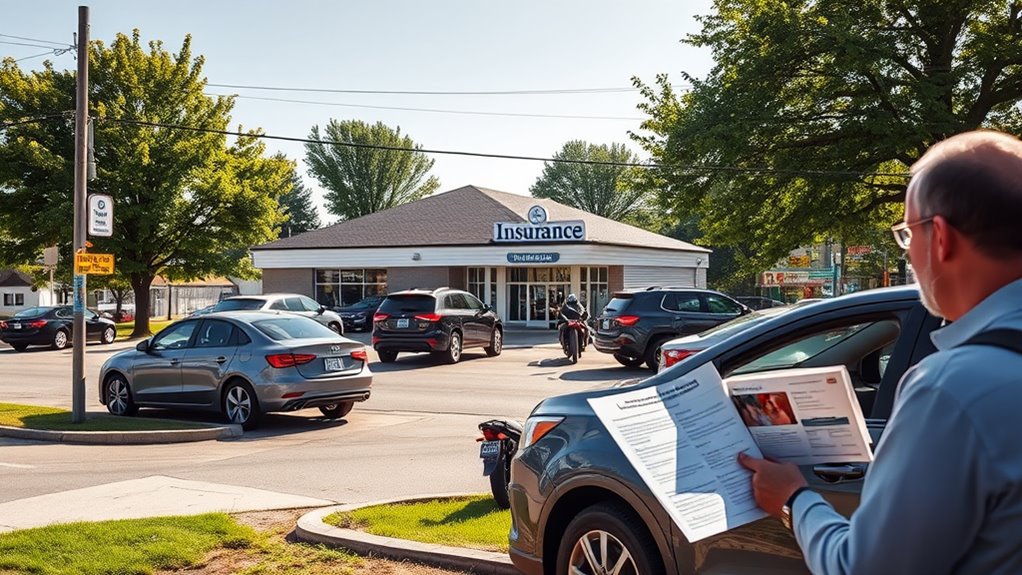
What Are Temporary SR22 Insurance Costs?

temporary sr22 insurance costs

Have you ever wondered what it really costs to secure temporary SR22 insurance? The expenses can vary widely, influenced by your driving history and the insurer you choose. While initial filing fees might seem manageable, monthly premiums for high-risk drivers can skyrocket. Understanding these costs is essential, as any lapse in coverage can lead to serious complications. What factors should you consider to make the best choice for your situation?

When you find yourself needing temporary SR22 insurance, understanding the associated costs is vital. SR22 isn't a type of insurance but a certificate of financial responsibility that proves you meet the minimum liability coverage mandated by your state. Typically required for high-risk drivers—those with DUIs or multiple traffic violations—this certificate is filed by your insurance company with the DMV to guarantee compliance. As a result, knowing what to expect regarding costs can help you navigate this challenging situation.

First, you should consider the SR22 filing fee, which usually ranges from $25 to $50. This one-time charge is separate from your insurance premiums and applies to each vehicle or non-owner policy. Depending on your insurer, there may also be a monthly fee associated with maintaining the SR22, which can add to your overall expenses. Keep in mind that these costs can vary slightly based on your state and the specific insurance provider you choose.

Insurance premiums for drivers with an SR22 are considerably higher than standard insurance rates. This is primarily due to the high-risk profile of the drivers needing SR22 coverage. Annual costs can range from $2,000 to $5,600, depending on your driving history and the state's requirements. The increased likelihood of claims from high-risk drivers directly impacts these premiums. However, maintaining a clean driving record over time may help lower your premiums as you demonstrate improved responsibility. Being classified as a high-risk driver often results in these increased premiums due to prior violations.

The duration of the SR22 requirement typically lasts at least three years, although this can vary based on the offense and the state laws in question. During this period, any cancellation of your insurance could lead to suspension of your license, making it vital to keep your policy active. If you were to cancel your insurance prematurely, you might've to restart the SR22 process, incurring additional costs and delays.

There are different types of SR22 insurance, including Owner SR22, Non-Owner SR22, and Operator SR22. An Owner SR22 covers you when you own a vehicle, while a Non-Owner SR22 applies if you don't own a car but may drive others'. Generally, Non-Owner SR22 policies are cheaper than Owner policies, which can ease the financial burden. Regardless of the type, all SR22 premiums tend to be higher than standard insurance due to the associated risks.

To reduce your overall SR22 costs, you can take several proactive steps. For instance, committing to a clean driving record can gradually lower your premiums. Additionally, selecting higher deductibles may lower your initial costs, and opting for a less expensive vehicle can also decrease your insurance rates. Finally, comparing quotes from multiple providers will help you find the most competitive rates tailored to your specific needs.

Conclusion

In summary, steering through temporary SR22 insurance costs can feel like riding a rollercoaster—thrilling yet nerve-wracking! With fees and premiums that can skyrocket, it's essential to stay on top of your coverage. Missing a payment could trigger a storm of additional costs and headaches. So, buckle up and keep your compliance in check! Remember, a little diligence now can save you from a mountain of financial chaos later on. Your wallet will thank you!


What Are Ohio’s SR22 Insurance Requirements?

ohio sr22 insurance guidelines

If you've faced serious traffic violations in Ohio, understanding SR-22 insurance requirements is essential for regaining your driving privileges. You'll need to file an SR-22 certificate to demonstrate financial responsibility, which includes meeting specific liability coverage limits. Maintaining this insurance for three years is vital, and any lapses could lead to significant penalties. So, what exactly do you need to know about the coverage specifics and the consequences of non-compliance?

If you've faced serious traffic violations in Ohio, understanding the state's SR-22 insurance requirements is vital for regaining your driving privileges. An SR-22 isn't an insurance policy; it's a certificate that proves your financial responsibility by confirming you meet the minimum liability coverage mandated by Ohio law. This requirement typically arises if you've been convicted of serious offenses like DUIs or reckless driving. To reinstate your driving privileges, your insurance company must file the SR-22 form with the Ohio DMV on your behalf.

Who needs SR-22 insurance? If you've been convicted of a DUI or an OVI (Operating a Vehicle Under the Influence), you'll need to obtain an SR-22. Additionally, if you've been caught driving without insurance or have multiple traffic violations, you may also find yourself in need of this certificate. If you were involved in an accident without insurance, you'll likely require an SR-22 for license reinstatement as well. Even if you're a non-vehicle owner, if your license has been suspended due to coverage issues, you'll need a non-owner SR-22 policy. SR-22 insurance is often required for those with serious driving infractions to ensure compliance with state regulations.

Ohio sets specific minimum liability coverage requirements that you must meet. These include $25,000 for bodily injury per person, $50,000 for bodily injury per accident, and $25,000 for property damage. These limits apply to both owner and non-owner SR-22 policies. Failure to maintain these minimums can result in further suspension of your license, which is something you definitely want to avoid while trying to regain your driving privileges. SR22 compliance is crucial during this period to ensure you adhere to Ohio's financial responsibility laws.

Generally, you'll need to maintain your SR-22 insurance for three years following the conviction. However, in certain cases, this requirement can extend beyond that period depending on the nature of your offense. It's important to highlight that even if you decide to move to another state during this time, you must still comply with Ohio's SR-22 requirements. Continuous coverage is mandatory; any lapse could lead to additional penalties, including further license suspension.

The filing process for an SR-22 is usually straightforward. Your insurance company will file the SR-22 electronically with the Ohio DMV, typically processing it within a short period. There's often a small fee for this service, generally between $25 and $50. Should your policy be canceled during the SR-22 period, your insurer must notify the DMV, which is essential for avoiding complications.

However, it's important to be aware that SR-22 insurance can lead to considerably higher premiums. Insurance companies consider SR-22 drivers as higher-risk individuals, and your premiums will likely reflect that. Factors such as the type of violation and your overall driving record can influence how much your rates increase. To find affordable SR-22 insurance, it's wise to shop around for quotes from multiple providers, as costs can vary considerably.

Conclusion

In the end, maneuvering Ohio's SR-22 insurance requirements might feel like a punishment for past mistakes, yet it ironically serves as a lifeline for those seeking redemption. You're compelled to prove your financial responsibility, ensuring safer roads for everyone. So, while you might find the process burdensome, remember that maintaining this coverage not only reinstates your driving privileges but also reflects a commitment to responsible behavior. Embrace the irony: your past can pave the way for a more secure future.

What Are Affordable Alternatives to SR22 Coverage?

affordable sr22 coverage options

Did you know that high-risk drivers can face premiums that are up to three times higher than average rates? If you find yourself in this situation, exploring affordable alternatives to SR22 coverage might be essential. Nonstandard insurance providers, regional insurers, and bundling options could help you save. However, you might also want to reflect on how maintaining a clean driving record can impact your future premiums. What steps can you take to make your insurance more manageable?

When you find yourself needing SR22 insurance due to a major traffic violation, it's important to explore affordable alternatives that won't break the bank. SR22 insurance acts as a document proving you have the minimum required insurance coverage after an infraction, but it often leads to noticeably higher premiums since it classifies you as a high-risk driver. It's crucial to understand that SR-22 insurance in Ohio is mandated by the state for specific violations, which can impact your insurance needs.

Explore budget-friendly SR22 insurance options after a traffic violation to avoid high premiums as a high-risk driver.

The good news is that the costs can vary widely depending on the insurance provider, so knowing where to look can help you manage expenses effectively. If you qualify, USAA offers one of the cheapest SR22 options available. This company is known for its competitive rates, particularly for eligible individuals, such as military members and their families. Other major players like State Farm and GEICO also present competitive rates for SR22 policies. Additionally, most drivers in South Carolina need SR-22 insurance for a duration of three years, which can significantly impact your long-term expenses.

However, don't overlook regional insurers like Auto-Owners and Erie, which might offer better deals in specific areas. To get the best possible rate, you should compare quotes from multiple insurance companies, as this can greatly affect your overall premium. Another strategy to lower your costs is to look into bundling your SR22 policy with other types of insurance, like home or renters insurance. This can lead to considerable discounts. Additionally, if you drive an older or less valuable car, you might find that your premiums decrease.

Maintaining a clean driving record during the SR22 period can also contribute to lower rates in the long run. Paying your premiums annually instead of monthly can further help reduce costs, as can taking a defensive driving course, which often qualifies you for additional discounts. If you find it challenging to secure standard coverage due to your high-risk status, companies like Bristol West and The General specifically cater to drivers in your situation. While they may charge higher rates, they can be practical alternatives when mainstream insurers aren't an option.

Keep in mind that these nonstandard insurance options typically offer fewer discounts, but as you accumulate continuous, incident-free years, you may eventually qualify for better rates down the line. Understanding the coverage duration is important as well. Generally, you'll need to maintain SR22 coverage for three years following your violation. It's important to keep continuous insurance during this period; missing payments can lead to policy cancellation and may invite further legal issues.

Once your SR22 requirement ends, you might notice a decrease in your premium costs, reflecting your regained status as a lower-risk driver.

Conclusion

In summary, finding affordable alternatives to SR22 coverage is essential for high-risk drivers. Did you know that nearly 30% of drivers with SR22s end up paying more than necessary due to lack of research? By exploring nonstandard insurers, regional options, and bundling policies, you can greatly reduce your costs. Plus, maintaining a clean driving record and enrolling in defensive driving courses can lead to further savings. It's all about being proactive and informed in your insurance choices.

Triggers for Mandatory Insurance in Ohio

ohio mandatory insurance triggers

In Ohio, mandatory insurance isn't just a suggestion; it's a requirement tied directly to vehicle ownership and operation. If you own or drive a vehicle, maintaining the minimum insurance coverage is essential to protect yourself and others. Ignoring this obligation can lead to serious penalties, including license suspension. Understanding these triggers is important for avoiding financial and legal pitfalls. But what specific actions can put you at risk?

In Ohio, understanding the triggers for mandatory insurance is vital for every driver, as failing to comply can lead to significant penalties. The state mandates that you carry at least $25,000 in bodily injury coverage per person, $50,000 per accident, and $25,000 in property damage coverage per accident. These minimums are designed to protect not just yourself but also others on the road. If you don't meet these requirements, you risk facing severe consequences, including license suspension until you obtain proper insurance.

Proof of financial responsibility is another significant aspect you must evaluate. You're required to show evidence of insurance or other acceptable financial responsibility methods, such as a $30,000 bond or a deposit with the state treasurer. This proof must be readily available in your vehicle, as law enforcement may request it during traffic stops. Failing to provide this documentation could lead to additional penalties and administrative fees, compounding the issues of non-compliance. An SR-22 certificate is often needed to demonstrate future compliance after certain violations.

While the minimum coverage is often seen as sufficient, it's important to recognize its limitations. In serious accidents, the minimum may not cover all damages incurred, prompting many drivers to assess higher coverage limits. Bodily injury liability will cover medical expenses for others if you're at fault, while property damage liability takes care of damages to other vehicles or property. Many drivers opt for more than the minimum liability coverage due to high potential claims.

Although optional coverages like collision, extensive, MedPay, and uninsured motorist coverage exist, they aren't legally required. This flexibility allows you to tailor your insurance to better fit your needs, but it also places the onus on you to guarantee adequate protection.

Ohio operates under a fault system, meaning that the at-fault driver is liable for damages incurred in an accident. This contrasts with no-fault systems in other states, where personal injury protection is mandatory, and you may need to navigate a different process for claims. If you're involved in an accident, understanding this system is vital, as it affects how compensation is handled and the potential for legal ramifications.

The penalties for non-compliance can escalate quickly. A first-time offender may face license suspension until insurance is obtained, with a reinstatement fee of $40. Subsequent offenses incur higher fees and may require an SR-22 certificate as proof of future compliance. Additionally, failure to surrender your license could lead to further administrative fees, and you might even lose your vehicle registration.

Penalties for non-compliance in Ohio can escalate swiftly, leading to license suspension and increased fees for repeat offenders.

Legislative updates have shaped Ohio's insurance requirements, reinforcing the need for financial responsibility. The Ohio Department of Insurance oversees these regulations, guaranteeing that drivers comply with the law.

As you navigate your responsibilities on the road, it's important to stay informed about the evolving landscape of mandatory insurance to protect yourself and others effectively. Overall, being aware of these triggers not only keeps you compliant but also guarantees that you're prepared for any eventualities on the road.

Conclusion

In Ohio, the theory that mandatory insurance is merely a financial burden often overlooks its protective purpose. By requiring coverage, the state safeguards not only individual drivers but also the broader community from the devastating financial impacts of accidents. Ignoring these mandates can result in severe penalties, underscoring the importance of compliance. Ultimately, understanding the rationale behind these triggers reveals that maintaining insurance isn't just a legal obligation—it's a critical step in ensuring safety on the roads for everyone.

Top Reasons for Insurance Activation in Ohio

insurance activation reasons ohio

When it comes to securing your peace of mind, activating insurance in Ohio is a prudent step. It not only protects your assets but also guarantees compliance with state laws. With a multitude of insurance providers, you can find competitive rates that enhance your financial security. Additionally, the significance of health and auto insurance in safeguarding against unforeseen risks can't be overstated. But what are the specific benefits that could affect your everyday life?

When traversing the financial landscape in Ohio, insurance activation plays an indispensable role in safeguarding your assets and well-being. It's not just about compliance; it's about building a safety net that protects your home, vehicle, and family. For Ohioans, insurance represents a competitive marketplace, with over 275 companies vying for your business. This abundance of choices typically translates into better rates and coverage options, enhancing your financial security.

The economic impact of insurance in Ohio is substantial. Insurance companies invest heavily within the state, contributing to financial growth and economic development. The competitive environment guarantees that you're likely to find lower rates compared to other states, ultimately benefiting both consumers and businesses.

You'll find that the insurance industry not only supports local economies but also employs more than 132,000 people, making it a significant source of employment. In fact, Ohio ranks 7th nationally for insurance employment and boasts the 2nd largest market for property and casualty insurance. This means that if you're considering a career in this field, you'll have a wealth of opportunities available.

Moreover, the legal framework surrounding insurance in Ohio is designed to protect you as a consumer. The Ohio Department of Insurance regulates the industry, assuring that practices are fair and transparent. Specific laws mandate essential benefits for health insurance plans, including mental health parity and substance abuse treatment. Such regulations are fundamental for guaranteeing that you receive thorough coverage. Additionally, the requirement of SR-22 insurance ensures that high-risk drivers can still obtain necessary auto insurance coverage.

Health insurance activation is particularly significant in Ohio. It serves to distribute medical risks and provides a consistent payment source for healthcare providers. The Affordable Care Act (ACA) has further solidified your access to necessary health services by mandating guaranteed issue and coverage for pre-existing conditions. This means you won't be denied coverage based on medical history, which is a considerable step toward equitable healthcare access.

Auto insurance is another important area. The Ohio Automobile Insurance Plan (OAIP) caters to drivers who struggle to obtain insurance through the traditional marketplace. While OAIP may charge higher rates due to the high-risk nature of its clients, having auto insurance is mandatory for licensed drivers. This requirement helps manage financial risks associated with vehicle ownership, providing peace of mind in the event of an accident. Additionally, OAIP serves as a vital insurance option for individuals unable to obtain coverage elsewhere.

In Ohio, maintaining an active insurance license requires agents to undergo continuing education every two years, ensuring agents remain informed about current regulations and trends. This commitment to education reinforces the integrity of the insurance industry, guaranteeing that you receive knowledgeable service whenever you seek assistance.

Conclusion

In Ohio, activating insurance isn't just a good idea; it's a lifeline that can turn chaos into calm. With the multitude of options available, you can find coverage tailored to your needs, ensuring your assets and health are protected. This isn't just about compliance; it's about creating a safety net that supports you and your family. Don't wait for the unexpected—activate your insurance today and secure peace of mind that can feel as solid as a rock.

Top Affordable Insurance Providers in Ohio

affordable insurance options ohio

When searching for affordable insurance providers in Ohio, it's essential to take into account various options that cater to different needs. Geico and Erie, for instance, offer competitive rates that can fit your budget, while American Family targets high-risk drivers with reasonable pricing. Understanding these choices can greatly influence your insurance experience. What factors should you prioritize when selecting the right provider for your unique situation?

When searching for affordable insurance providers in Ohio, how do you find the best options that fit your needs? The state offers a competitive market, which results in lower car insurance rates compared to the national average. With various providers vying for your business, you can identify options that align with your specific requirements, whether you're a young driver, have a poor credit score, or are considered high-risk.

Geico stands out as a top choice for full coverage, offering rates as low as $58 per month. This competitive pricing makes it an excellent option for individuals seeking extensive protection without breaking the bank. If you're looking for minimum liability coverage, Erie presents an attractive deal at just $28 per month. Understanding these average costs is essential, as the typical full coverage premium in Ohio hovers around $114 per month. The average cost of full coverage in Ohio is $114, which means you're likely to find better deals in the Buckeye State than in many other regions. Additionally, many drivers in Ohio may require SR-22 insurance due to specific legal obligations.

Geico offers full coverage as low as $58, while Erie provides minimum liability at just $28, making Ohio's rates highly competitive.

In terms of customer satisfaction, USAA and Erie consistently receive high ratings. However, USAA is restricted to military families, which limits its availability. Erie, on the other hand, is an accessible option for many and also offers unique features like accident forgiveness. This can be particularly beneficial if you're concerned about maintaining your rates after an incident.

For young drivers, affordability is critical as they often face higher premiums. Geico provides favorable rates for younger individuals, especially if they've recently had a ticket, making it a smart choice for this demographic. Conversely, if you fall into the high-risk category, American Family offers the most competitive pricing at around $678 per year. Understanding your driving history can guide you toward the right provider.

If you have poor credit, Geico again comes to the forefront as the most affordable option. Insurance companies often consider credit history when calculating premiums, so selecting a provider that understands your situation can lead to significant savings.

Geographical variance also plays a significant role in determining costs. For instance, Caldwell and Upper Sandusky boast the cheapest car insurance rates in Ohio, while cities like Toledo and Youngstown are on the pricier end. Local agents can provide valuable insights into city-specific discounts, which may further reduce your premiums.

Finally, consider the coverage options and add-ons that fit your lifestyle. Hastings Mutual offers customizable policies, including travel interruption and pet injury coverage, which may be appealing depending on your needs. Multi-policy discounts are another way to reduce costs, so if you're planning to bundle auto with home insurance, inquire about potential savings.

Conclusion

In the grand scheme of Ohio's insurance market, it seems you can snag a deal without selling your soul—or your firstborn. With options like Geico and Erie, you won't need a crystal ball to predict savings. So, whether you're a young driver dodging tickets or a high-risk driver seeking mercy, the right provider is out there, lurking in the shadows, ready to pounce on your insurance needs. Because who knew affordability could be this exciting?

Steps to Obtain Ohio’s Required Insurance

obtain ohio insurance requirements

When you're looking to obtain Ohio's required insurance, you'll want to research providers, compare rates, and gather necessary information. Understanding your coverage options, such as liability, collision, and extensive, is vital. Once you've selected a policy, confirming your financial responsibility is essential. But what steps should you take to make sure you're fully compliant and protected? Let's explore the process together.

When driving in Ohio, it's essential to understand the state's required insurance coverage to guarantee you're compliant and protected. Ohio mandates that all drivers carry certain types of liability insurance. This includes bodily injury liability coverage, which must cover up to $25,000 per person and $50,000 per accident, as well as property damage liability coverage, which is set at a minimum of $25,000 per accident. These coverages are designed to protect others if you're found at fault in an accident.

However, it's significant to mention that liability coverage doesn't cover your own injuries or vehicle damage, so you might want to contemplate additional coverages. Liability insurance is crucial for protecting your personal assets and covering legal fees if you're sued by an injured party. An important aspect to consider is that some violations, such as DUI, may require you to obtain SR-22 insurance, which is a certificate proving you carry the necessary insurance.

Liability coverage protects others but won't cover your own injuries or vehicle damage; consider additional options for full protection.

To start the process of obtaining insurance, you'll want to contact various insurance providers to compare rates and coverage options. Most companies offer online quotes, allowing you to assess your options conveniently. Be prepared to provide details about your vehicle, driving history, and personal information, as these factors will influence your premium.

While the minimum liability coverage might meet legal requirements, it may not be sufficient if you're involved in a serious accident, so think about purchasing higher coverage limits for added protection.

Once you've selected a provider and policy, you'll need to confirm you can prove your financial responsibility. In Ohio, you must carry proof of insurance at all times while driving, which can take the form of an insurance ID card or a policy declaration page. Both electronic and paper versions are acceptable, so keep this documentation handy to avoid legal penalties. Not having proof of insurance can lead to fines and additional complications, including the potential suspension of your vehicle registration.

If you're contemplating alternatives to traditional insurance, Ohio allows for other methods of proving financial responsibility. You can use a bond, cash deposit, or even a self-insurance option if you own multiple vehicles. A BMV certificate indicating a $30,000 deposit can also suffice. These alternatives serve the same purpose as insurance, confirming you meet state requirements.

Besides the required liability coverage, you might want to explore optional coverages that can enhance your protection. Extensive coverage safeguards against non-collision damages, while collision coverage takes care of damages resulting from accidents. Uninsured/underinsured motorist coverage can be invaluable if you're involved in a crash with a driver who lacks sufficient insurance.

Additionally, think about medical payments coverage for expenses following an accident, as well as extras like roadside assistance or rental car reimbursement.

Lastly, keep in mind that several factors affect your insurance rates, including the type and age of your vehicle, your location within Ohio, and even your demographics. Your driving history, including any past accidents or violations, will also play a significant role in determining your premium.

Conclusion

Now that you've gathered quotes and compared coverage options, you're just a step away from securing Ohio's required insurance. But wait—have you double-checked all your details? Missing even a small piece of information could cost you time or money. Confirm you understand your selected policy and keep that proof of insurance handy. With everything in place, you'll be ready to hit the road, knowing you're protected. What's holding you back? Don't wait—take action today!

SR22 Insurance Insights for Non-Owners

non owner sr22 insurance insights

If you're a high-risk driver without a vehicle, understanding SR22 insurance for non-owners is essential. This coverage allows you to meet state liability requirements while driving borrowed cars, ensuring you stay compliant and protected. However, costs can vary based on your risk profile, and maneuvering through these nuances can be tricky. What factors should you consider to make the best choice for your situation?

Navigating through the world of SR22 insurance can be daunting, especially for those who don't own a vehicle but still need to demonstrate financial responsibility. If you've found yourself in the position of needing an SR22 filing, understanding its implications and requirements is fundamental. SR22 insurance serves as proof of financial responsibility for high-risk drivers, often triggered by serious infractions like DUIs or repeated traffic offenses. Even without ownership of a vehicle, you must meet state mandates to guarantee public safety, which can vary significantly from state to state.

Navigating SR22 insurance can be challenging, especially for non-vehicle owners needing to prove financial responsibility.

The primary requirement for obtaining non-owner SR22 insurance is to comply with your state's minimum liability insurance standards. This insurance typically covers liability for bodily injury and property damage that may occur while driving a non-owned vehicle, such as rentals or friends' cars. Fundamentally, it's a way for you to remain legally compliant while using vehicles that aren't yours. Failing to maintain your SR22 filing can lead to severe consequences, including license suspension or hefty fines, so staying on top of your obligations is imperative.

One of the key benefits of non-owner SR22 insurance is the flexibility it offers. You can drive borrowed vehicles without the worry of being underinsured, as this policy provides significant liability coverage. This coverage is crucial, especially since accidents can happen anytime, and without proper insurance, the financial repercussions can be significant. Furthermore, having this insurance can help you reinstate your driving privileges after a suspension, which is often necessary for getting back on the road legally. Additionally, non-owner SR22 insurance is required for high-risk drivers in many states to ensure compliance with local laws.

Regarding the types of coverage included, liability coverage is the primary focus, as it protects others from bodily injury or property damage caused by your actions. While extensive and collision coverage is generally not available for non-owned vehicles, some policies may include uninsured motorist coverage, which can be a lifesaver if you're involved in an accident with an uninsured driver. It's important to understand that SR22 insurance requirements can differ across states, which may impact the coverage needed.

It's also worth noting that insurance for non-owned vehicles usually acts as secondary coverage, meaning it kicks in after the owner's policy.

Costs associated with non-owner SR22 insurance tend to be lower than standard policies since there's no vehicle coverage involved. Initial filing fees are relatively minor, typically around $25, but your premiums may rise due to your high-risk status. Factors such as your driving history, location, and the insurance provider all play a role in determining the final cost. Different states have varying minimum coverage requirements, which can impact pricing as well.

To obtain non-owner SR22 insurance, you'll need to demonstrate that you don't own a vehicle and meet your state's insurance requirements. Not all insurance companies offer SR22 filings, so it's important to research providers who do. Once you've chosen a provider, they'll file the SR22 form with the DMV on your behalf, confirming you're compliant with state regulations.

Understanding these aspects of non-owner SR22 insurance can empower you to navigate this complex landscape confidently, allowing you to meet your obligations while enjoying the freedom to drive.

Conclusion

In the vast landscape of driving, SR22 insurance for non-owners serves as your safety net, allowing you to navigate the roads with confidence. Picture yourself behind the wheel of a borrowed car, secure in the knowledge that you're meeting state requirements while protecting yourself financially. By understanding these essential coverages, you can steer clear of legal troubles and focus on the open road ahead. Remember, being informed today paves the way for safer travels tomorrow.

Renewing SR22 Insurance: A Step-by-Step Guide

sr22 insurance renewal process

When it comes to renewing your SR-22 insurance, timing and preparation are key. You'll want to reach out to your insurance provider at least 15 days before your current policy expires. Make certain they're aware of your SR-22 needs and have your documents ready. If you're not satisfied with your current insurer, exploring new options can also be beneficial. Let's explore the necessary steps to guarantee you maintain your driving privileges without interruption.

Renewing your SR-22 insurance is fundamental for keeping your driving privileges intact after serious violations or convictions. The SR-22 form isn't an insurance policy itself, but a certificate that confirms you meet your state's minimum auto insurance requirements. This certificate typically expires, demanding renewal within a specific timeframe—usually 15 days before the policy's expiration. It's imperative to keep track of these dates to avoid any lapses that could lead to license suspension.

Renewing your SR-22 insurance is crucial to maintain your driving privileges and avoid potential license suspension.

To renew your SR-22 insurance, you'll first need to contact your insurance provider. Make sure they're aware that you need to maintain your SR-22 filing. It's essential to guarantee that the SR-22 remains active throughout the entire duration required by your state, which is generally three years, but can stretch up to five years in certain circumstances. Continuous coverage is key; any lapse in your insurance may result in your provider notifying the DMV, potentially triggering penalties and extending the time you need to maintain the SR-22. SR-22 insurance typically lasts at least two to three years, depending on individual circumstances. Additionally, the SR-22 filing process can vary slightly from state to state, so understanding your specific requirements is crucial.

When you call your insurance provider, be prepared with relevant documents like your policy details and driver's license number. Clear communication with your insurer will expedite the renewal process. Some insurance companies might charge a filing fee for the SR-22, typically around $25, though this can vary by state. If your current provider doesn't support SR-22 filings, you may need to find a new insurer that does. Not all companies offer SR-22 services, so do your research to guarantee a smooth change.

After renewing your SR-22, your insurance company will file the certificate with your state's DMV upon payment and request. This filing confirms that your auto insurance meets the legal requirements, protecting your right to drive. Keep in mind that having multiple traffic offenses, a suspended license, or being involved in an accident without coverage can lead to an SR-22 requirement.

Costs associated with SR-22 insurance can be higher than standard insurance policies because they're considered high-risk. In addition to the filing fee, you may face increased auto insurance premiums. However, there are often ways to reduce costs, such as exploring discount options or bundling policies with the same insurer.

It's important to stay proactive about your SR-22 insurance. If your coverage lapses, you risk not only losing your driving privileges but also facing additional penalties that could extend the duration of your SR-22 requirement. Staying informed about your state's specific SR-22 laws and requirements will help you navigate this process effectively.

Conclusion

In summary, renewing your SR-22 insurance isn't just a formality; it's vital for maintaining your driving privileges. Many believe that letting it lapse won't have consequences, but the truth is, it can lead to license suspension and higher future premiums. By staying proactive and starting the renewal process early, you guarantee continuous coverage and peace of mind. Don't risk your driving rights—take the necessary steps to keep your SR-22 active and compliant.

Ohio SR22 Insurance for Non-Owners Explained

non owner sr22 insurance ohio

When life's little bumps lead to a suspended license, Ohio SR22 insurance for non-owners can be your ticket back to the road. This policy isn't just any insurance; it's an essential step to prove your financial responsibility after serious driving violations. Understanding its requirements and costs can save you from future headaches. However, there's more to this coverage than meets the eye, and knowing the details can make all the difference.

If you've faced serious driving violations in Ohio, you may need non-owner SR22 insurance to comply with state requirements. This form confirms that you have sufficient car insurance to meet Ohio's minimum liability coverage mandates, which are $25,000 per person, $50,000 per accident, and $25,000 for property damage.

While many drivers associate SR22 with vehicle ownership, non-owner SR22 insurance is specifically designed for those who don't own vehicles but still need to drive occasionally. Non-owner SR22 insurance can be an essential option for individuals in various situations.

Non-owner SR22 insurance caters to drivers without vehicles, ensuring they're compliant while driving occasionally.

You'll typically need non-owner SR22 insurance after serious violations like DUI/DWI offenses, reckless driving, or driving without insurance. Refusing a sobriety test or having outstanding legal judgments, such as unpaid child support, can also trigger the requirement for SR22 coverage. In these scenarios, obtaining non-owner SR22 insurance becomes vital for reinstating your suspended driver's license and ensuring legal compliance with Ohio's financial responsibility laws.

Non-owner SR22 insurance primarily provides liability coverage, which protects against bodily injury and property damage to others while driving a vehicle that you don't own. It's significant to note that this form of insurance doesn't cover damages to the vehicle you're driving, nor does it include comprehensive or collision coverage. Instead, it acts as secondary insurance, stepping in to cover claims that exceed the vehicle owner's coverage.

To get non-owner SR22 insurance, you'll find that many insurance providers offer these policies, and they're easily accessible through various online platforms. When shopping for coverage, it's wise to compare rates and policy details, as costs can vary considerably based on your driving history and the insurer you choose. Additionally, the average annual cost for non-owner SR22 insurance ranges from $200 to $500, influenced by various factors.

When you secure a policy, your insurer will file the SR22 form with the Ohio Bureau of Motor Vehicles (BMV) on your behalf, ensuring you meet the state's requirements.

Once you have your non-owner SR22 insurance, it's imperative to maintain continuous coverage throughout the required period, which typically ranges from three to five years, depending on your specific situation. If your policy lapses, you risk facing additional fines and a potential suspension of your driver's license. Consequently, keeping your coverage active is of utmost significance.

While filing fees for SR22 typically range between $15 and $25, the overall cost of your non-owner SR22 insurance policy will likely be higher than standard insurance rates due to the high-risk nature of your driving history. The average rates can fluctuate considerably based on individual circumstances, so it's vital to stay informed about the costs involved.

Conclusion

In conclusion, Ohio SR22 insurance for non-owners is your ticket to regaining driving privileges and proving financial responsibility, even if you don't own a vehicle. It's a small price to pay compared to the monumental consequences of driving without proper coverage. With costs ranging from $200 to $500 annually, securing this policy can be a straightforward step towards a brighter, more responsible future on the road. Don't let past mistakes define your driving journey—take action today!

Call Us Now