Why Should You Cancel SR22 Insurance in Ohio?

cancel sr22 insurance ohio

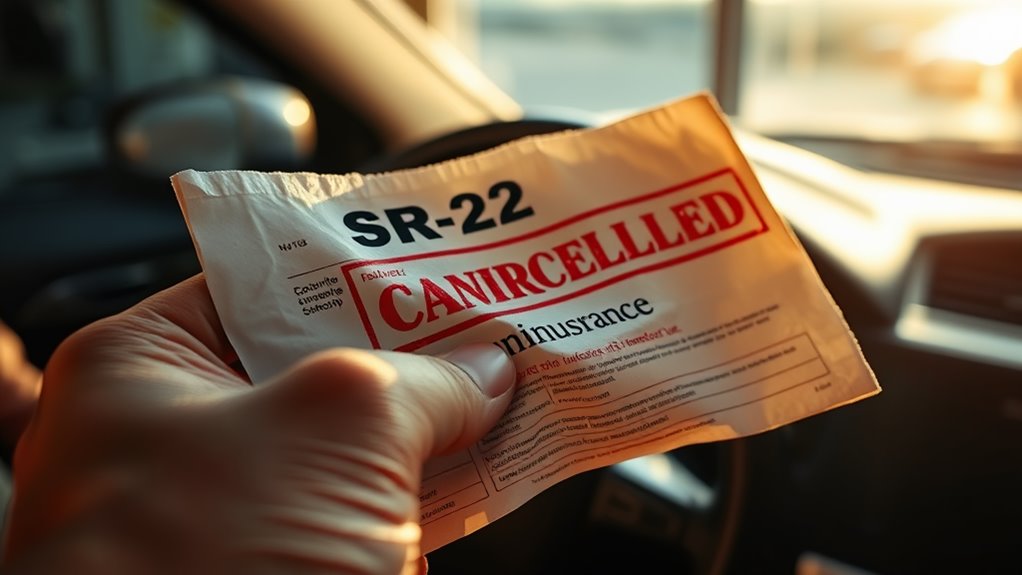
If you’ve completed the required three-year SR22 insurance period in Ohio, it’s time to contemplate canceling it. This step not only signifies your progress in regaining normal driving privileges but can also lead to lower insurance rates. Shifting to a standard policy can ease the financial strain of high-risk insurance. But before you make that decision, there are vital factors to weigh that could impact your future driving experience.

If you’ve completed your SR22 insurance requirement in Ohio, you may be considering canceling your policy. However, before making any decisions, it’s vital to guarantee you meet all the eligibility criteria for cancellation. You must have fulfilled the legal requirements set by Ohio state laws, which typically involve maintaining SR22 coverage for three continuous years without any gaps. Additionally, any outstanding fines or reinstatement fees from the original suspension must be paid, and you must have complied with any court-ordered conditions for reinstatement. It’s essential to understand that SR-22 insurance is a certificate of financial responsibility required for high-risk drivers.

Premature cancellation of your SR22 insurance can lead to serious consequences. If you cancel your policy before fulfilling the required coverage period, you risk immediate suspension of your driving privileges. This couldn’t only lead to substantial fines but also make it considerably more challenging to obtain insurance in the future. Moreover, if you find yourself needing to reinstate your driving privileges, the process can become complicated and costly. Driving under suspension can lead to further legal issues, which is something you definitely want to avoid. Notably, maintaining compliance with state laws regarding high-risk driving is crucial to avoid these penalties.

To guarantee a smooth cancellation process, start by verifying that you’ve completed the SR22 requirement. You can confirm this with the Ohio Bureau of Motor Vehicles (BMV) or your insurance agent. It’s wise to secure a new insurance policy before canceling your SR22 coverage to prevent any gaps in coverage. Once you’re ready, inform your insurance company of your intention to cancel the policy. Make sure to document the cancellation by obtaining written confirmation. This serves as proof that you followed the necessary steps and complied with Ohio state regulations.

If you’re hesitant about canceling your SR22 insurance, consider alternatives. You could adjust your existing policy to lower your premiums instead of canceling altogether. Shopping around for different insurance providers might also yield more affordable SR22 options. If the monthly fees feel overwhelming, explore payment scheduling options or seek financial counseling services. Additionally, taking defensive driving courses can demonstrate your commitment to safe driving practices, potentially lowering your insurance rates.

Financial considerations play a considerable role in your decision to cancel. After completing your SR22 requirement, it’s likely your insurance rates may decrease. However, keep in mind that there are fees associated with reinstating your driving privileges if you cancel prematurely. Cancellations can also negatively impact your credit score, so budgeting strategies are vital to guarantee a smooth changeover when maintaining or switching insurance policies. If affordability is an issue, explore financial assistance programs that can help alleviate some of the burdens.

Lastly, understanding the legal implications of your specific situation is significant. Familiarize yourself with the type of suspension you’re facing and recognize when court involvement might be necessary. Knowing the hearing procedures can prepare you for any disputes regarding your suspension, making the overall process smoother. By taking these steps, you can make an informed decision about canceling your SR22 insurance in Ohio.

Conclusion

So, you’ve survived the SR22 rollercoaster—congrats! Now it’s time to kick that high-risk insurance to the curb. By canceling it, you’re not just saving money; you’re also reclaiming your driving dignity. Who needs to pay extra for “adventure insurance” when you can enjoy standard rates instead? With a clean record and a lighter wallet, you can finally drive like a regular person again. Embrace the freedom and wave goodbye to those SR22 shackles!

Why Is Temporary Insurance Costly in Ohio?

temporary insurance pricing factors

If you're considering temporary insurance in Ohio, you might be surprised by the high costs. Limited availability of short-term policies drives up premiums, as most insurers favor longer terms. This lack of market competition means you miss out on discounts typically offered for long-term coverage. Additionally, factors like urban accident rates and your driving history can further inflate these rates. What other hidden factors might be affecting your temporary insurance costs?

While temporary car insurance in Ohio can be hard to find, understanding its costs and options is essential for drivers seeking short-term coverage. The limited availability of temporary insurance policies in the state directly influences their pricing. Typically, most car insurance policies in Ohio are designed for six-month terms, which means options for shorter durations are scarce. Insurers often prefer these longer policies for their stability and revenue, resulting in a market that doesn't readily cater to transient needs. Additionally, many drivers in Ohio may find themselves needing SR-22 insurance due to legal requirements after certain violations.

Temporary car insurance in Ohio is scarce, with most policies favoring six-month terms, impacting availability and pricing for short-term coverage.

When looking at costs, a six-month policy averages around $401 in Ohio, while a 90-day policy can set you back approximately $201. If you're seeking even shorter coverage, USAA offers competitive rates starting at about $45 for a one-month policy, making it one of the more affordable options available. However, the general trend indicates that temporary policies can be more expensive compared to their longer-term counterparts. This is largely due to the limited number of providers offering temporary insurance, which leads to less market competition and, consequently, higher premiums.

Moreover, the nature of temporary insurance contributes to its higher costs. Insurers often charge more because frequent policy changes can lead to gaps in coverage. These gaps can affect your future premiums, as insurers may view you as a higher risk. The lack of long-term discounts for temporary policies adds another layer of cost, making them less economically viable for many drivers. Unlike a six-month policy, where you might benefit from loyalty discounts or safe-driving incentives, short-term policies often lack these financial perks. Temporary car insurance is typically designed for periods less than six months and is not commonly available in the U.S. market.

Drivers in Ohio should also consider how location impacts insurance rates. For instance, urban areas like Cleveland generally have higher premiums due to increased accident rates. Your driving history plays a significant role; if you've had accidents in the past, expect your premiums to rise further. Additionally, the type of vehicle you drive and even your credit score can influence the cost of temporary insurance. All these factors create a complex pricing structure that can be challenging to navigate.

For those seeking alternatives, purchasing a six-month policy and canceling it early can save money, although this strategy can lead to future rate hikes. Companies like Hugo Insurance offer flexible short-term coverage options, which might be worth exploring. Additionally, car-sharing services often include insurance in the rental agreement, providing another avenue for those needing short-term coverage.

Conclusion

In Ohio, while temporary insurance may seem like a quick fix, it often comes with a hefty price tag. The limited availability of short-term policies means you're left maneuvering a less competitive market, which drives up premiums. Coupled with the absence of long-term discounts, this can turn your short-term solution into a budgetary burden. Ultimately, what appears as a convenient option may lead to unexpected financial detours, making it essential to weigh your choices carefully.

Why Is Minimum Coverage Important With SR22?

minimum coverage ensures compliance

When it comes to SR22 requirements, understanding minimum coverage is essential for your compliance and protection. This coverage not only meets state mandates but also shields you from hefty out-of-pocket expenses in case of an accident. Failing to maintain the required coverage can lead to penalties and complications, especially in states like Florida. What happens if you ignore these requirements? The implications could be more serious than you think.

When you find yourself needing an SR22, understanding the minimum coverage requirements is important for maintaining your driving privileges. An SR22 isn't an insurance policy but a certificate of financial responsibility that verifies compliance with your state's minimum liability insurance mandates. In Florida, this means you'll need at least $10,000 in personal injury protection (PIP) and $10,000 in property damage liability (PDL). Other states may have different requirements, so it's necessary to be aware of local laws. Additionally, SR-22 insurance is typically required for drivers who have committed serious offenses and need to demonstrate financial responsibility.

Minimum coverage is more than just a legal formality; it's a safeguard against financial liability. By ensuring you meet these minimums, you provide proof of liability coverage, which is particularly important if you've committed serious offenses like DUIs or driving without insurance. The cost of your SR22 insurance will likely be higher, reflecting the increased risk associated with your driving record. In this context, higher coverage limits can offer additional protection, shielding you from significant out-of-pocket expenses in the event of an accident. SR22 also acts as proof to authorities that required auto insurance coverage is maintained, which is crucial for your driving status.

Minimum coverage is essential for financial protection, especially after serious offenses, and higher limits can further shield you from unexpected costs.

In addition to the mandatory PIP and PDL, some states may require bodily injury liability coverage as part of your SR22 filing. This coverage helps protect against costs related to injuries inflicted on others during an accident. For instance, in Florida, your basic PIP covers up to 80% of your medical expenses after an accident, which is essential for ensuring your financial wellbeing.

While extensive and collision coverage aren't part of the minimum SR22 requirements, considering additional coverage options could be beneficial based on your existing health insurance.

Maintaining the minimum coverage limits is significant. In Florida, the standard requirement is $10,000 in PIP and $10,000 in PDL, but more severe offenses may necessitate higher limits, such as those found in FR44 policies. These policies, designed for more serious infractions, often require limits of $100,000 for bodily injury. The financial burden of an accident can be overwhelming, making higher limits a wise investment for your peace of mind.

Your insurance costs will reflect the perceived risk of your driving history. A history of serious traffic violations will likely lead to higher SR22 premiums, and any lapses in coverage can result in additional fines or even license suspension. It's important to maintain continuous insurance coverage to avoid these penalties. If your coverage lapses, your insurer is obligated to notify the state, which could jeopardize your driving privileges.

Finally, if you don't own a car but still need to drive, non-owner SR22 policies might be necessary. These allow you to meet the minimum coverage requirements while driving vehicles that aren't yours. Understanding state-specific requirements and maintaining uninterrupted coverage is key to complying with SR22 regulations, ensuring you avoid extended penalties.

Conclusion

In the world of driving, minimum coverage with an SR22 acts as both a safety net and a double-edged sword. On one hand, it protects you from hefty out-of-pocket expenses after an accident; on the other, it's a necessary step to regain your driving privileges. Without it, you risk facing penalties and greater complications. Balancing these realities underscores the essential role minimum coverage plays—not just in compliance, but in ensuring your financial security on the road.

Top 5 Online Quotes for SR22 Insurance

sr22 insurance online quotes

You might find it interesting that many drivers overlook the importance of comparing SR-22 insurance quotes. It's essential to guarantee you're getting the best rates available. Several top providers offer competitive options, each with unique benefits. From State Farm to Progressive, there's more to evaluate than just price. Let's explore the specifics of these providers and see how they stack up against each other.

Key Takeaways

  • State Farm offers affordable SR-22 insurance with average annual costs around $799 and monthly premiums as low as $27.
  • Geico provides non-owner SR-22 coverage starting at $39 per month, ensuring compliance with Ohio's SR-22 mandates.
  • Progressive's monthly rates begin at approximately $32 for minimum coverage, lower than state averages, with good customer service.
  • Country Financial specializes in SR-22 insurance services, with costs influenced by driver risk factors and an affordable filing fee.
  • Farmers Insurance streamlines the SR-22 process with a filing fee of $17 and instant electronic documentation for convenience.

State Farm SR-22 Insurance Quotes in Ohio

ohio state farm sr 22

If you're looking for affordable SR-22 insurance in Ohio, State Farm stands out as a top choice. They offer competitive rates, with average annual costs around $799, making them one of the cheapest options for high-risk drivers. You can find monthly premiums as low as $27, considerably lower than the state average. State Farm provides reliable service, ensuring that SR-22 filings are handled smoothly. Their coverage meets Ohio's minimum liability requirements, giving you peace of mind as you navigate your situation. Additionally, SR-22 insurance is essential for drivers who have had their licenses suspended due to violations. With filing fees typically ranging from $15 to $25, State Farm makes compliance easier and more budget-friendly. Additionally, State Farm's rates are 59% cheaper than the average car insurance for high-risk drivers in Ohio.

Geico SR-22 Insurance Options for Ohio Residents

Geico offers Ohio residents a reliable option for SR-22 insurance, providing competitive rates and essential coverage for high-risk drivers.

With policies starting around $39 per month for non-owner coverage, Geico keeps costs manageable. They guarantee compliance with Ohio's SR-22 mandates, covering $25,000 per person, $50,000 per accident for injuries, and $25,000 for property damage.

Geico offers non-owner SR-22 coverage starting at $39/month, ensuring compliance with Ohio's insurance requirements.

Geico simplifies the filing process by submitting the SR-22 form directly to the DMV on your behalf, saving you time and hassle. Their accessible customer support is ready to assist with any questions you may have.

Plus, you can adjust your policy as needed while maintaining SR-22 compliance, making Geico a flexible choice for your insurance needs.

Progressive SR-22 Insurance Pricing in Ohio

When searching for SR-22 insurance in Ohio, you'll find that Progressive offers competitive pricing tailored to meet the needs of high-risk drivers.

Monthly rates start around $32 for minimum coverage and about $102 for full coverage, making them more affordable compared to the state average of $55 and $123, respectively. Your costs may vary based on your driving history, vehicle type, and coverage level.

Progressive also charges a filing fee between $15 to $25 for SR-22 paperwork. Known for good customer service and options for extensive coverage, Progressive can be an excellent choice for those needing SR-22 insurance.

Plus, you might qualify for usage-based discounts that reward safe driving habits.

Country Financial SR-22 Insurance Rates in Ohio

ohio sr 22 insurance rates

Progressive may be a popular option for SR-22 insurance in Ohio, but Country Financial also offers coverage that drivers should consider.

While Country Financial isn't typically highlighted as a top SR-22 provider, it does provide essential services for those needing this coverage.

Country Financial may not be a leading SR-22 provider, but it offers valuable coverage options for those in need.

You should keep in mind that SR-22 insurance generally costs more due to the increased risk associated with high-risk drivers. Factors influencing your rates include the severity of your violation, your driving history, and even your age and marital status.

The SR-22 filing fee in Ohio is relatively low, ranging from $15 to $25. If you're looking for affordability, it's wise to shop around and compare quotes from different providers, including Country Financial.

Farmers Insurance SR-22 Coverage and Quotes in Ohio

Farmers Insurance offers a reliable option for SR-22 coverage in Ohio, catering specifically to drivers facing license suspensions.

With an SR-22 filing fee of just $17, it stands out for affordability. You'll find a streamlined process for setting up your policy and filing the necessary SR-22 forms, ensuring you get back on the road quickly.

Unlike some providers, Farmers doesn't charge broker fees, and they provide instant electronic documentation for your SR-22.

Conclusion

Finding the right SR-22 insurance doesn't have to be a headache. With providers like State Farm, Geico, Progressive, Country Financial, and Farmers Insurance, you've got options that cater to your needs and budget. Imagine driving with peace of mind, knowing you've secured the best deal possible. Why settle for less when you can compare quotes and guarantee you're getting the coverage you deserve? Take the leap and explore these options today!

Top 10 Motorcycle Insurance Rates for Riders

motorcycle insurance rate comparison

Finding the absolute best motorcycle insurance rates can feel like searching for a needle in a haystack. As a rider, you need to understand the various factors that influence premiums, from age and driving history to the type of motorcycle you own. Each element plays an essential role in determining your costs. With so many options available, how do you guarantee you're getting the most competitive rates? Let's explore the top contenders in motorcycle insurance.

Key Takeaways

  • Motorcycle insurance rates vary significantly based on the rider's driving history, with serious violations leading to higher premiums.
  • The type of motorcycle influences insurance costs, with high-performance models generally incurring higher rates.
  • Location plays a crucial role; urban areas often have steeper insurance premiums compared to rural locations.
  • Younger riders typically face higher insurance rates due to a perceived increased risk of accidents.
  • Completing safety courses can result in discounts, helping to lower overall motorcycle insurance premiums.

Understanding SR22 Insurance for Motorcycle Riders in Ohio

sr22 insurance for motorcycles

When you're maneuvering through the complexities of motorcycle insurance in Ohio, understanding SR22 insurance is essential, especially if you've faced serious traffic violations.

SR22 acts as proof of financial responsibility, confirming that you meet Ohio's minimum liability coverage requirements. It's crucial to recognize that SR22 isn't an insurance policy itself; instead, it's a form your insurance company files with the Ohio Bureau of Motor Vehicles (BMV) to validate your compliance. Additionally, SR22 filings can affect your insurance premiums, as insurers view them as a sign of higher risk.

After violations like DUIs or reckless driving, this filing becomes mandatory. Keep in mind that motorcycle coverage remains separate; SR22 doesn't cover motorcycles unless specified. Typically, you'll need this coverage for 2-3 years, and any lapse can lead to significant penalties, including license suspension. Additionally, continuous coverage is essential during this period, as gaps in coverage can result in further penalties or even license suspension.

Factors Influencing SR22 Insurance Rates in Ohio

Although several factors can affect your SR22 insurance rates in Ohio, understanding their intricacies is essential. Your driving record plays a significant role; serious offenses like DUIs can substantially increase your premiums.

Additionally, the type of motorcycle you ride matters—newer, high-performance models typically come with higher rates. Your location also influences costs; urban areas often see steeper premiums than rural ones.

Personal factors, such as age, gender, and credit score, further impact your rates. Younger drivers and those with poor credit may face higher costs.

To keep your rates manageable, maintain a clean driving record, improve your credit score, and consider shopping around for the best quotes.

Comparing SR22 Insurance Costs for Different Motorcycle Types

How do SR22 insurance costs differ among various motorcycle types? Costs can vary considerably based on the motorcycle's classification.

High-performance bikes, like sport motorcycles, typically incur higher SR22 rates due to their perceived risk factors, including speed and theft susceptibility.

High-performance sport motorcycles face higher SR22 rates due to their speed and increased theft risk.

In contrast, touring and cruiser bikes are often viewed as lower risk, resulting in more affordable premiums and broader insurer options.

Additionally, attaching SR22 to liability insurance may provide a cost-effective route in some states.

Factors such as state regulations and the specific motorcycle model further influence these costs.

Ultimately, understanding these differences helps you make informed decisions to manage your SR22 insurance expenses effectively.

The Impact of Driving History on SR22 Rates

driving history influences sr22 rates

Driving history plays an essential role in determining SR22 insurance rates, with varying offenses greatly impacting premiums.

For instance, DUI offenses typically result in significant rate increases due to the heightened risk profile. Similarly, driving under suspension or being uninsured during a traffic stop can lead to higher SR22 costs, indicating a disregard for regulations.

Accumulating points on your record or being involved in at-fault accidents without insurance also negatively affects your rates. Repeated offenses, such as multiple DUIs or recurring uninsured incidents, further exacerbate the financial consequences.

Even minor violations like speeding can contribute to increased premiums if they accumulate over time, highlighting the importance of maintaining a clean driving record to mitigate SR22 rate hikes.

Age and Experience: How They Affect SR22 Insurance for Ohio Bikers

When considering SR22 insurance for Ohio bikers, age and experience are essential factors that greatly influence premium rates.

Younger riders, particularly those aged 18-24, often face higher premiums due to their increased accident risk. Conversely, riders aged 30-50 benefit from lower rates as their experience translates to a reduced likelihood of accidents.

Younger riders face higher premiums due to accident risk, while experienced riders enjoy lower rates for their safety record.

However, older riders (65+) may see increased premiums due to age-related factors like slower reflexes.

Your experience also plays a significant role; completing safety courses or maintaining a clean driving record can lead to substantial discounts.

Ultimately, your age and experience level shape not only your SR22 premiums but also your coverage options and overall insurance costs in Ohio.

Marital Status and SR22 Insurance Premiums in Ohio

While many factors influence motorcycle insurance premiums, marital status tends to play a lesser role in determining SR22 insurance rates for Ohio bikers.

Most of the elements impacting SR22 premiums relate to your driving record and the specific offenses leading to the requirement, rather than whether you're married or single.

Although married riders may benefit from bundling policies for overall savings, this isn't a significant factor in SR22 rates.

Instead, insurance providers focus on your history, such as accidents or violations, and the perceived risk associated with your motorcycle.

Consequently, regardless of marital status, high-risk riders face higher premiums due to their driving behavior rather than their relationship status.

Regional Variations in SR22 Insurance Rates Across Ohio

ohio sr22 insurance rates

Although regional factors heavily influence SR-22 insurance rates, the variation can be surprising for many riders in Ohio.

For instance, Columbus offers some of the lowest rates, with Erie providing SR-22 coverage at just $54 per month. In contrast, Cincinnati also features competitive rates but may differ greatly from Columbus.

Statewide, the average SR-22 insurance costs around $1,703 annually, and rates can vary by over $1,800 among different insurers.

Factors such as traffic density, accident rates, and the specific violation type impact these costs. As a result, it's essential for you to compare quotes from multiple providers to secure the best rate available in your city.

Tips for Reducing SR22 Insurance Costs for Motorcycle Riders

To effectively reduce your SR-22 insurance costs as a motorcycle rider, it's essential to focus on several key strategies that can greatly impact your premiums.

Start by comparing multiple insurance providers to find the best rates, utilizing online quotes for efficiency.

Consider enrolling in a motorcycle safety course, as this can demonstrate your commitment to safe riding and potentially lower your costs.

Opt for higher deductibles if your financial situation allows, as this often results in reduced premiums.

Additionally, maintain a clean driving record and explore discounts for bundling insurance policies.

Finally, consider paying your premiums annually to avoid extra fees and take advantage of any loyalty discounts your insurer may offer.

The Importance of Coverage Levels in SR22 Insurance

Understanding the importance of coverage levels in SR22 insurance is vital for motorcycle riders, as these levels directly affect your financial protection and compliance with state regulations.

The minimum liability coverage might meet state mandates but offers limited protection in case of an accident. Consequently, opting for full coverage, which includes extensive and collision, can provide broader financial safeguards, especially given the higher premiums associated with SR22 filings.

Additionally, factors like your bike type, driving record, and location greatly influence these coverage levels and associated costs.

Maintaining adequate coverage not only guarantees compliance but also helps prevent license suspension, reinforcing the critical nature of selecting appropriate coverage levels tailored to your specific circumstances.

Common Misconceptions About SR22 Insurance for Motorcyclists in Ohio

Many motorcycle riders in Ohio hold misconceptions about SR-22 insurance that can lead to confusion and potentially costly mistakes.

First, it's vital to understand that SR-22 isn't an insurance policy; it's a form proving you meet state insurance requirements after serious infractions.

While some think SR-22 coverage extends to any vehicle, it's actually linked to you as the policyholder.

Additionally, non-owner SR-22 policies are often cheaper than traditional options, focusing on liability.

It's also a myth that SR-22 is exclusively for DUI offenses; it applies to various serious infractions.

Finally, remember that the SR-22 requirement in Ohio lasts three to five years, so maintaining continuous coverage is essential to avoid license issues.

Conclusion

In summary, understanding SR22 insurance is vital for Ohio motorcycle riders, especially as nearly 30% of riders face higher premiums due to driving history alone. By considering factors like age, experience, and motorcycle type, you can better navigate your options. Remember, taking a safety course can lead to significant discounts, making it easier to find affordable coverage. Stay informed and proactive to guarantee you get the best rates while protecting yourself on the road.

7 Tips for Budget-Friendly Ohio Insurance Solutions

affordable insurance options ohio

Maneuvering through the maze of Ohio insurance can feel like an intimidating quest, but it doesn't have to be. By following a few strategic tips, you can considerably cut costs while ensuring you have the coverage you need. From understanding SR22 requirements to leveraging discounts, there are numerous ways to enhance your financial well-being. Curious about how to maximize your savings without sacrificing quality? Let's explore these essential strategies together.

Key Takeaways

  • Compare quotes from multiple insurance providers to find the best rates and coverage options available in Ohio.
  • Look for discounts such as multi-policy, occupational, or good student discounts to lower your premiums.
  • Evaluate your specific coverage needs and consider adjusting your plan to prevent overpaying for unnecessary features.
  • Monitor your policy renewals and review options at least 120 days in advance to secure better rates.
  • Utilize online comparison tools like NerdWallet and The Zebra for quick and efficient cost comparisons.

Understand Ohio SR22 Insurance Requirements

ohio sr22 insurance details

What do you need to know about Ohio SR22 insurance requirements? An SR22 isn't a standard insurance policy; it's a certificate proving your financial responsibility. If you've faced serious offenses like DUIs or driving uninsured, you'll need it. In Ohio, an SR22 filing is often required for high-risk drivers to demonstrate compliance with state insurance laws.

Ohio mandates a minimum coverage of $25,000 for bodily injury per person, $50,000 per accident, and $25,000 for property damage. This requirement typically lasts three to five years, depending on the severity of your offense. Maintaining continuous coverage is crucial, as any gaps can lead to further penalties or license suspension.

Your insurance provider will file the SR22 electronically with the Ohio BMV. Keep in mind, maintaining this coverage is essential, as failing to do so could lead to further license suspension.

Understanding these requirements helps you stay compliant and protects your driving privileges.

Compare Quotes From Multiple Providers

When you're shopping for insurance in Ohio, comparing quotes from multiple providers can greatly impact your savings.

With options like USAA, State Farm, and Geico, you'll find a variety of coverage types and price points. For instance, State Farm offers the most affordable liability-only insurance, while Travelers excels in full coverage options.

Explore diverse coverage types and price options from USAA, State Farm, and Geico to find the best fit for your insurance needs.

Don't overlook discounts, as Geico provides numerous savings opportunities for different groups.

Utilize online tools like NerdWallet and The Zebra to streamline your comparisons, and remember that prices can change annually.

Keeping track of your eligibility for discounts guarantees you're always getting the best deal.

Evaluate Your Coverage Needs

How can you guarantee you're getting the right insurance coverage for your needs? Start by reviewing your medical history and any pre-existing conditions you may have.

Consider your family's health requirements and whether employer-based coverage is available to you. Take a close look at the plan deductibles and out-of-pocket costs, as these will impact your budget considerably.

Familiarize yourself with Ohio's mandated benefits, ensuring your chosen plan includes essential services. Evaluate the types of insurance available—individual, group, or state-specific options like Medicaid—and understand how state regulations protect you.

Look for Discounts and Bundling Options

seek savings and packages

Wondering if you're maximizing your insurance savings?

It's time to look for discounts and bundling options that can greatly lower your premiums. Here are some strategies to take into account:

  1. Multi-Policy Discounts: Combine auto and renters insurance for savings up to 20%.
  2. Occupational Discounts: If you're a teacher or firefighter, you might qualify for discounts up to 13%.
  3. Good Student Discounts: Students with good grades can enjoy discounts ranging from 7% to 20%.
  4. Safety Device Discounts: Installing safety devices on your vehicle could save you around 9%.

Consider Increasing Your Deductibles

Looking for ways to further cut your insurance costs? Consider increasing your deductibles. By opting for a higher deductible, you can greatly lower your premiums, making your insurance more affordable.

This strategy is particularly effective for auto and homeowners insurance, where you can choose between fixed dollar or percentage deductibles. However, keep in mind that a higher deductible means you'll pay more out-of-pocket if you file a claim.

It's crucial to maintain an emergency fund to cover these potential costs. Weigh the trade-offs carefully—while savings on premiums can be appealing, make sure you're prepared for the financial impact during claims.

This approach requires thoughtful financial planning, but it can lead to long-term savings.

Monitor Policy Renewals for Better Rates

As you approach your insurance policy renewal, staying vigilant can help you secure better rates and avoid unnecessary costs.

Here are four key steps to monitor:

Here are four essential steps to keep in mind for a smooth insurance policy renewal process.

  1. Start Early: Begin reviewing your policy at least 120 days in advance to identify potential adjustments.
  2. Engage Regularly: Schedule proactive meetings 90 to 60 days before renewal to discuss your current coverage and any changes in your needs.
  3. Compare Carriers: Research different insurance providers and their rates to guarantee you're getting the best deal possible.
  4. Track Market Trends: Stay informed about economic factors and rate fluctuations that could impact your premium.

Stay Informed About Changes in Insurance Laws

monitor insurance law updates

Staying informed about changes in insurance laws is vital for every Ohio driver, especially since these regulations can directly impact your coverage and costs.

Ohio requires drivers to maintain minimum liability insurance, and failing to comply can lead to severe penalties, including license suspension. By keeping track of legislative updates, you can avoid legal repercussions and guarantee your policy meets current standards.

Engaging with industry resources and regulatory bodies helps you stay ahead of any changes that could affect your insurance. Remember that Ohio operates under a fault system, so understanding your rights and responsibilities is essential.

Staying informed not only protects you legally but also helps you make informed decisions about your insurance needs.

Conclusion

By following these tips, you can navigate the world of Ohio insurance with confidence and ease. Coincidentally, as you save money through careful planning and informed choices, you'll also enhance your financial security. Remember, staying proactive about your coverage and exploring discounts can lead to unexpected savings. So, don't wait—start comparing quotes and evaluating your options today. Your future self will thank you for taking these budget-friendly steps toward extensive protection.

7 Best Ways Insurance Rates Change After Filing

insurance rate changes explained

When you file for SR22 insurance, it's vital to understand how your rates might change. Various factors influence these adjustments, from the nature of your violation to your driving history. Insurers evaluate your overall risk profile, which can lead to significant rate fluctuations. Additionally, not every insurance company treats SR22 filings the same way, so finding the best option is essential. Let's explore the key elements that drive these rate changes and what you can do to manage them effectively.

Key Takeaways

  • SR22 filings typically lead to a 15-40% increase in insurance premiums for high-risk drivers.
  • Serious violations, like DUIs, can cause average premiums to spike significantly, sometimes exceeding $2,500.
  • Insurers may impose filing and coverage fees, generally ranging from $15 to $50.
  • Clean driving records during the SR22 period can help mitigate future premium increases.
  • Continuous coverage without lapses is crucial to avoid further penalties and maintain lower rates.

Understanding SR22 Insurance Requirements in Ohio

ohio sr22 insurance requirements

Understanding SR22 insurance requirements in Ohio is essential for drivers who've faced certain violations, as it guarantees compliance with state laws. Ohio mandates SR22 for both personal and non-owner insurance policies, ensuring you meet minimum liability coverage of $25,000 for bodily injury per person, $50,000 per accident, and $25,000 for property damage. Typically, you'll need to maintain this filing for three years, which can extend to five years for severe offenses. The Bureau of Motor Vehicles (BMV) notifies you if an SR22 filing is necessary due to violations like DUIs or driving without insurance. Most filings occur electronically and are processed within 72 hours by your insurance company, streamlining compliance with these state regulations. Additionally, continuous coverage is mandatory during this period to avoid penalties or license suspension. It is also important to note that SR22 insurance can cause your premiums to increase significantly compared to standard coverage rates.

How SR22 Affects Insurance Premiums

Filing an SR22 typically leads to a noticeable increase in your insurance premiums, as it signals to insurers that you're a high-risk driver.

The severity of your violations, such as DUIs, can greatly influence how much your rates rise. If you'd a clean driving record before the SR22, you might see smaller increases compared to drivers with previous infractions.

The impact on your insurance rates varies significantly based on the severity of your violations and your driving history.

Additionally, filing and coverage fees often range from $15 to $50, adding to your overall costs. Even after the SR22 requirement ends, the underlying offense may continue to impact your premiums.

Each state has unique requirements, and different insurers assess risk variably, making it essential to shop around for the best rates available.

The Duration of SR22 Filing and Its Impact on Rates

While the SR-22 requirement typically lasts for three years in most states, its duration can greatly affect your insurance rates. Understanding the factors influencing how long you'll need to maintain an SR-22 is essential.

  • Severity of the driving offense impacts SR-22 duration.
  • Some states enforce longer requirements for serious violations.
  • Repeat offenses can extend the SR-22 filing period.
  • The SR-22 period starts from the incident or conviction date.
  • You must actively remove the SR-22 after the mandated period.

Over time, maintaining a clean driving record can help mitigate premium increases.

After the SR-22 period, you may notice a decrease in rates, allowing for better negotiation with insurers and potential savings.

Rate Increases for High-Risk Drivers With SR22

increased rates for sr22 drivers

When you hold an SR-22, your insurance rates can spike considerably, especially if you're categorized as a high-risk driver due to serious violations like DUIs or reckless driving.

The rate increase hinges on the specific violation, not the SR-22 itself, often ranging from 15-40% based on your state. For instance, a first DUI in Ohio could lead to premiums averaging $2,514.

Different insurers have varying rates; for instance, Erie Insurance may offer more competitive pricing for high-risk drivers compared to companies like Geico or Farmers.

Additionally, maintaining an SR-22 after moving to another state may necessitate higher minimum coverage, further complicating your financial responsibilities.

Shopping around for specialized high-risk policies is essential for mitigating costs.

The Role of Driving History in SR22 Insurance Costs

Your driving history plays an essential role in determining SR22 insurance costs, as insurers assess risk based on past violations. A record filled with infractions can lead to considerably higher premiums.

  • Accumulating points from traffic violations can trigger SR22 requirements.
  • Serious offenses, like DUIs, dramatically increase insurance rates compared to minor tickets.
  • Insurers monitor your driving record after SR22 filing to guarantee compliance.
  • Each state's regulations affect SR22 requirements and associated costs.
  • A high-risk classification from past violations can lead to stricter coverage requirements and increased premiums.

Understanding these factors helps you anticipate potential costs when steering through SR22 insurance, making certain you maintain the necessary coverage while minimizing financial strain.

Potential Discounts and Savings With SR22 Insurance

Filing for SR22 insurance often leads to higher premiums due to a driver's past infractions, but there are various ways to mitigate these costs.

You can explore discounts such as those for installing anti-theft devices, which enhance vehicle security and lower premiums. Consider bundling your policies to benefit from multi-policy discounts or insuring multiple vehicles under one policy for additional savings.

Customer loyalty discounts reward long-term clients, while setting up automatic payments can also lead to reduced costs.

Don't forget to compare quotes from different providers, as companies like Progressive and State Farm may offer competitive rates.

Long-Term Effects of SR22 on Future Insurance Rates

sr22 impact on premiums

Although SR22 insurance serves as a necessary measure to demonstrate financial responsibility after serious driving infractions, its implications on future insurance rates can be significant and long-lasting. The impact of SR22 can extend beyond the filing period, affecting your premiums for years.

SR22 insurance is crucial for proving financial responsibility but can lead to lasting increases in your insurance premiums.

  • Initial rate hikes can range from $400 to $1,000 annually.
  • A clean driving record during the SR22 period can help mitigate future rate increases.
  • The severity and type of violation influence the duration of rate impacts.
  • Different insurers assess risk variably, leading to differing rates post-SR22.
  • Maintaining continuous coverage without lapses is essential to avoid additional penalties.

Understanding these factors can help you navigate the complexities of insurance rates following an SR22.

Conclusion

In conclusion, understanding how SR22 insurance affects your rates is vital for managing costs. Notably, drivers with SR22 filings can see their premiums increase by an average of 50% to 100%. This significant rise emphasizes the importance of comparing quotes from various insurers and maintaining a clean driving record to potentially lower costs over time. By being proactive, you can better navigate the financial implications of SR22 insurance and secure a more favorable rate in the long run.

7 Best Insights on SR22 Duration Requirements

sr22 duration requirements insights

Maneuvering SR22 duration requirements in Ohio can be complex, especially if you've faced serious driving violations. It's crucial to understand how long you'll need to maintain this coverage and the factors that can affect that timeline. From the role of the Ohio DMV to the consequences of any lapses, knowing these insights can help you stay compliant. Let's explore what you need to know to avoid complications and maintain your driving privileges.

Key Takeaways

  • SR22 is typically required for three years after serious violations like DUIs, but can extend based on additional offenses.
  • Continuous insurance coverage is crucial; lapses can lead to penalties and restart the SR22 filing period.
  • The Ohio BMV monitors SR22 compliance, and insurers must report any coverage changes immediately.
  • Severity of violations influences duration; DUIs may result in SR22 requirements lasting up to five years.
  • Non-compliance can lead to license suspension and increased insurance premiums, emphasizing the importance of maintaining coverage.

Understanding SR22 Requirements in Ohio

sr22 insurance regulations ohio

When you find yourself needing an SR22 in Ohio, it's vital to understand its requirements and implications.

An SR22 serves as a certificate of financial responsibility, proving you have the minimum liability insurance required by state law. Specifically, you must maintain at least $25,000 for bodily injury per person, $50,000 per accident, and $25,000 for property damage. Additionally, SR22 insurance is often required after certain driving violations, emphasizing the importance of compliance.

An SR22 is a financial responsibility certificate, confirming you meet Ohio's minimum liability insurance requirements.

Eligibility is typically tied to serious offenses like DUIs or reckless driving. Your insurance company will file the SR22 form with the Ohio BMV, usually within 72 hours. Additionally, the duration of SR22 filing requirements generally lasts for three years for most violations.

If your coverage lapses, the BMV must be notified, or you may face penalties including fines and license suspension. Continuous coverage is essential to avoid additional legal complications.

Duration of SR22 Mandates Based on Offenses

The duration of SR22 mandates is closely tied to the type and severity of the offenses that necessitate its filing. For instance, a DUI or DWI conviction typically requires SR22 for a minimum of three years, while multiple traffic violations within a short timeframe may extend this duration.

If you drive without insurance or are involved in a serious accident without proper coverage, you'll likely face several years of SR22 requirements.

States also differ in their mandates; durations can range from one to five years. Maintaining continuous insurance coverage is essential, as any lapse can restart your SR22 period.

Understanding these nuances can help you navigate your obligations effectively and avoid additional penalties.

The Role of Ohio DMV in Monitoring SR22 Compliance

Ohio's Bureau of Motor Vehicles (BMV) plays an essential role in monitoring SR22 compliance, ensuring that drivers adhere to state financial responsibility laws. When insurance companies file SR22 forms, the BMV updates driver records, confirming minimum liability coverage.

Ohio mandates continuous SR22 coverage; any lapse can result in penalties, including license suspension and extended SR22 periods. Insurers must notify the BMV immediately if coverage is canceled, prompting the BMV to track compliance through electronic systems.

You can check your SR22 status on the BMV website, which emphasizes the importance of maintaining proof of financial responsibility. Regular checks on your compliance not only protect your driving privileges but also prevent severe consequences associated with non-compliance.

Factors Affecting SR22 Duration in Ohio

sr22 duration influencing factors

While managing the SR22 process in Ohio, several factors can influence how long you must maintain this filing.

Understanding these factors can help you navigate the requirements more effectively:

  1. Violation Severity: Serious offenses like DUIs can lead to longer SR22 durations, typically extending the requirement to five years.
  2. Coverage Lapses: Any gaps in your insurance coverage can result in penalties and an extended SR22 filing period.
  3. Additional Violations: Accumulating further traffic violations during your SR22 period can prolong the requirement, sometimes up to five years.

Consequences of Non-Compliance With SR22 in Ohio

Failing to comply with SR22 requirements in Ohio can have serious repercussions that extend beyond mere inconvenience. If you let your SR22 lapse, you risk immediate license suspension, which can vary in duration based on the nature of your non-compliance.

Multiple offenses can lead to even longer suspensions. Additionally, the Bureau of Motor Vehicles (BMV) is promptly notified by your insurance provider of any lapses, triggering administrative penalties.

Ignoring SR22 filing rejections exacerbates these penalties, prolonging your SR22 requirement. Furthermore, reinstating your license necessitates proof of insurance and payment of fees.

Maintaining continuous coverage is essential; any lapse can't only extend your SR22 duration but also subject you to legal complications and increased insurance premiums.

Financial Implications of Maintaining SR22 Coverage

Maintaining SR22 coverage can considerably impact your financial situation, often leading to higher insurance premiums compared to standard policies. Here are key financial implications to take into account:

  1. Extended Financial Burden: SR22 requirements typically last three to five years, prolonging the period of elevated premiums.
  2. Limited Insurance Options: You'll face fewer choices, which can lead to higher costs as not all insurers provide SR22 coverage.
  3. Potential Additional Fees: Expect filing fees for the SR22 certificate and penalties for any lapses in coverage, further straining your budget.

These factors can notably affect your overall financial health, limiting your ability to save or address other financial commitments.

Continuous compliance is essential to prevent additional costs and complications.

Transitioning to Standard Insurance After SR22 Period

standard insurance after sr22

Once you've completed your SR22 requirements, moving to standard insurance is a pivotal step towards regaining financial stability and driving freedom.

Start by confirming with your state's DMV that your SR22 filing is officially over. This verifies you've met all necessary compliance.

Next, compare quotes from various insurers, as premiums may decrease based on your clean driving record during the SR22 period.

Guarantee continuous coverage by overlapping your new policy with the existing one to avoid lapses. Communicate with your insurer to facilitate a smooth changeover.

Conclusion

In conclusion, understanding SR22 duration requirements in Ohio is essential for maintaining your driving privileges. While you might think three years is a long time, any lapse in coverage or additional violations can extend that period considerably. Staying compliant isn't just about following the law; it's about protecting your finances and future driving opportunities. By staying informed and proactive, you can shift smoothly back to standard insurance once your SR22 obligation ends, keeping your driving record clean.

5 Tips for Timely Insurance Compliance

timely insurance compliance tips

Steering through insurance compliance can feel overwhelming, especially when specific state requirements come into play. In Ohio, understanding SR22 filings and maintaining continuous coverage is vital. You'll want to be proactive about your policy and aware of potential pitfalls. By implementing a few key strategies, you can guarantee you're meeting all necessary requirements. But what are those strategies, and how can you effectively avoid common mistakes? Let's explore the essential steps you need to take.

Key Takeaways

  • Ensure you understand your state's insurance requirements, including SR22 obligations, to maintain compliance and avoid penalties.
  • Regularly review your insurance policy and coverage limits to prevent lapses and ensure you meet minimum liability requirements.
  • Communicate promptly with your insurance provider regarding any changes to your status or coverage to avoid unexpected issues.
  • Keep thorough documentation of your insurance policy and any correspondence with your provider to streamline any compliance checks.
  • Set reminders for renewal dates and SR22 filing obligations to ensure continuous coverage and adherence to state regulations.

Understanding Ohio's SR22 Requirements

ohio sr22 insurance requirements

When you find yourself facing serious traffic violations in Ohio, understanding the SR22 requirements becomes essential. The SR22 functions as proof that you meet the state's minimum liability insurance requirements: $25,000 per person, $50,000 per accident, and $25,000 for property damage. Additionally, it's important to remember that the SR-22 insurance must be filed by your insurance provider directly with the Ohio BMV.

You'll typically need an SR22 after offenses like DUI, reckless driving, or driving without insurance. It's important to maintain continuous coverage to avoid license suspension and fines; any lapses must be reported to the Ohio BMV. Continuous coverage is mandatory to ensure you remain compliant throughout the SR22 filing period.

The coverage generally lasts three years but can extend to five for severe violations. Remember, non-compliance can lead to fines and additional penalties, so staying informed and compliant is crucial for your driving privileges.

Key Steps in the SR22 Filing Process

Although the SR22 filing process may seem intimidating, understanding the key steps can streamline your experience and guarantee compliance with Ohio's regulations.

First, determine if you need an SR22, typically triggered by serious offenses like DUIs or driving without insurance.

Determine if an SR22 is necessary, often resulting from serious infractions such as DUIs or uninsured driving.

Next, contact an insurance provider experienced in SR22 filings. Ask about costs, including filing fees and premiums, as SR22 can raise your rates.

Your insurer will file the SR22 form on your behalf, requiring details like your license number and policy number. Be aware of the filing fee, often around $25.

Finally, maintain continuous coverage throughout the designated period to avoid penalties, ensuring you meet Ohio's minimum liability requirements. Regularly check your compliance to prevent lapses.

Timelines for SR22 Insurance in Ohio

Understanding the timelines for SR22 insurance in Ohio is vital for anyone traversing the complexities of compliance. Typically, you'll need to maintain SR22 coverage for at least three years, depending on the severity of your offense. Convictions for OVI, driving without insurance, or multiple traffic violations trigger this requirement.

It's important to avoid lapses in coverage, as any interruption can lead to immediate license suspension and an extended SR22 period. Additionally, Ohio's regulations mandate minimum liability coverage of $25,000 for bodily injury per person, totaling $50,000, plus $25,000 for property damage.

If you move to another state, remember that Ohio's requirements still apply, so keep these timelines in mind to guarantee continuous compliance and avoid penalties.

Common Delays and How to Avoid Them

avoiding common project delays

Delays in insurance claims can greatly impact your financial stability and peace of mind, so it's crucial to recognize common pitfalls and implement strategies to avoid them.

Complex claims processes and unclear liability often lead to extended wait times. Insufficient documentation can stall your claim, so gather all necessary evidence upfront.

Complex claims processes and unclear liability can cause significant delays; ensure you gather all necessary documentation from the start.

Insurance companies may request unnecessary information or misrepresent coverage, prolonging resolution. To counter these issues, maintain clear communication and respond promptly to requests.

Familiarize yourself with your policy to guarantee compliance. Regular follow-ups keep your claim active, while legal representation can hasten disputes.

Maintaining Compliance After SR22 Filing

Maintaining compliance after filing an SR22 can feel overwhelming, but it's essential for protecting your driving privileges. You must guarantee continuous coverage for the mandated period, typically three years, depending on your state.

If your insurance lapses or gets canceled, your insurer will notify the state, risking suspension or fines. Even if you move to a state without SR22 requirements, you still need to adhere to your original state's obligations.

Be proactive in comparing policies, as rates can increase considerably due to your high-risk status. Keep track of your documentation and be prepared for the reinstatement process, which involves filing a valid SR22 and paying necessary fees to regain your driving rights.

Conclusion

Maneuvering Ohio's SR22 requirements can feel like walking a tightrope, but with careful planning, you can achieve balance. By understanding your obligations, maintaining continuous coverage, and staying in close contact with your insurance provider, you're not just ticking boxes—you're securing peace of mind. Remember, compliance isn't just about avoiding penalties; it's about building a safer future. So, take these steps to guarantee you're on solid ground, ready to embrace the road ahead without fear.

5 Steps to Get High-Risk Insurance in Ohio

obtaining ohio high risk insurance

Many drivers in Ohio don't realize they may qualify as high-risk due to factors like a poor driving record or low credit score. Understanding your status is vital before seeking insurance. It's not just about finding coverage; it's about securing the right policy at a reasonable rate. To navigate this complex landscape effectively, follow these five essential steps that can make a significant difference in your insurance journey.

Key Takeaways

  • Assess your high-risk status by reviewing your driving record, insurance lapses, and any DUI/OVI convictions.
  • Collect necessary documentation including a government-issued ID, proof of residency, and vehicle details.
  • Compare quotes from multiple insurance providers, focusing on rates tailored for high-risk drivers.
  • Obtain and review quotes online or through brokers to find the best coverage and discounts.
  • Ensure compliance with Ohio regulations by maintaining required coverage and carrying proof of insurance in your vehicle.

Understand Your High-Risk Status

recognize your risk level

How do you know if you're considered a high-risk driver? You might fall into this category if you have an imperfect driving record, which includes multiple infractions or accidents. Lapses in insurance coverage and DUI/OVI convictions will also raise your risk profile. Additionally, your credit score can impact your status; poor scores often lead to higher premiums. High-risk auto insurance is specifically designed for drivers with such records, making it essential to understand your classification. It's important to note that obtaining SR-22 insurance may be necessary for certain high-risk drivers in Ohio.

Factors like the duration of your driving history, the type of vehicle you drive, and your living area play significant roles as well. For instance, urban areas usually have higher insurance rates. If you're unsure, reviewing your driving history and credit score can help clarify your risk status and prepare you for the next steps in securing insurance.

Gather Required Documentation

Gathering the required documentation is essential for securing high-risk insurance in Ohio. Start by collecting a government-issued ID and proof of Ohio residency.

Collect essential documents like a government ID and proof of residency to secure high-risk insurance in Ohio.

You'll also need details about your vehicle, including its make, model, and year. Prepare copies of your driving records, highlighting any citations or accidents, as well as your prior insurance history, especially any lapses.

If applicable, gather proof of income, which may affect your insurance options. Additionally, if you're opting for bonds instead of traditional insurance, obtain necessary documentation from the surety company.

Keeping these documents organized will streamline the application process and help you meet Ohio's legal mandates for financial responsibility.

Compare Insurance Providers

When you're looking to secure high-risk insurance in Ohio, comparing insurance providers is vital to finding the best rates and coverage options.

Start by evaluating key players like American Family, which offers the cheapest average annual premium at $678, followed closely by Erie Insurance at $787. State Farm comes next at $752, while GEICO and Allstate charge higher rates of $948 and $1,057, respectively.

Keep in mind factors that influence these premiums, such as your driving history, credit score, vehicle type, and location. A thorough comparison can help you identify which provider meets your needs while staying within budget.

This step is important before deciding on a policy to guarantee you're getting the best deal possible.

Obtain and Review Quotes

gather and assess quotations

Obtaining and reviewing quotes for high-risk insurance in Ohio can greatly impact your coverage choices and overall costs. Start by using online tools, like those on MoneyGeek, to generate quotes without needing personal info.

Compare rates from multiple providers to find the best deal. You might also consider utilizing an insurance broker, as they've access to a broader range of options and can tailor policies to your needs.

Don't overlook direct insurer websites—companies like Erie and American Family offer detailed quotes and potential discounts. Mobile apps provide a convenient way to manage quotes and policies on the go.

Finally, contacting customer service directly can yield personalized quotes and clarify any policy details you need.

Maintain Compliance With State Regulations

Maintaining compliance with state regulations is essential for high-risk drivers in Ohio, as it guarantees you avoid costly penalties and keeps your driving privileges intact.

To guarantee you remain in good standing, follow these key steps:

  1. Carry Proof of Insurance: Always have your insurance card in your vehicle and ready for traffic stops or accidents.
  2. Meet Coverage Requirements: Maintain at least $25,000 for bodily injury per person, $50,000 per accident, and $25,000 for property damage.
  3. Fulfill FR Coverage Duration: Keep your Financial Responsibility coverage for 3 to 5 years after your last offense.
  4. Pay Reinstatement Fees Promptly: If your license is suspended, pay any required fees to regain your driving privileges without delay.

Conclusion

Maneuvering the world of high-risk insurance in Ohio may feel like steering a ship through stormy waters, but with the right preparation, you can find your safe harbor. By understanding your status, gathering essential documents, and comparing providers, you're not just securing coverage; you're taking control of your journey. As you maintain compliance with state regulations, remember that each step brings you closer to smoother sailing. Your path to peace of mind is within reach—embrace it.

Call Us Now